Van review
Ford Transit Review (2026): The Full-Size Workhorse, Assessed
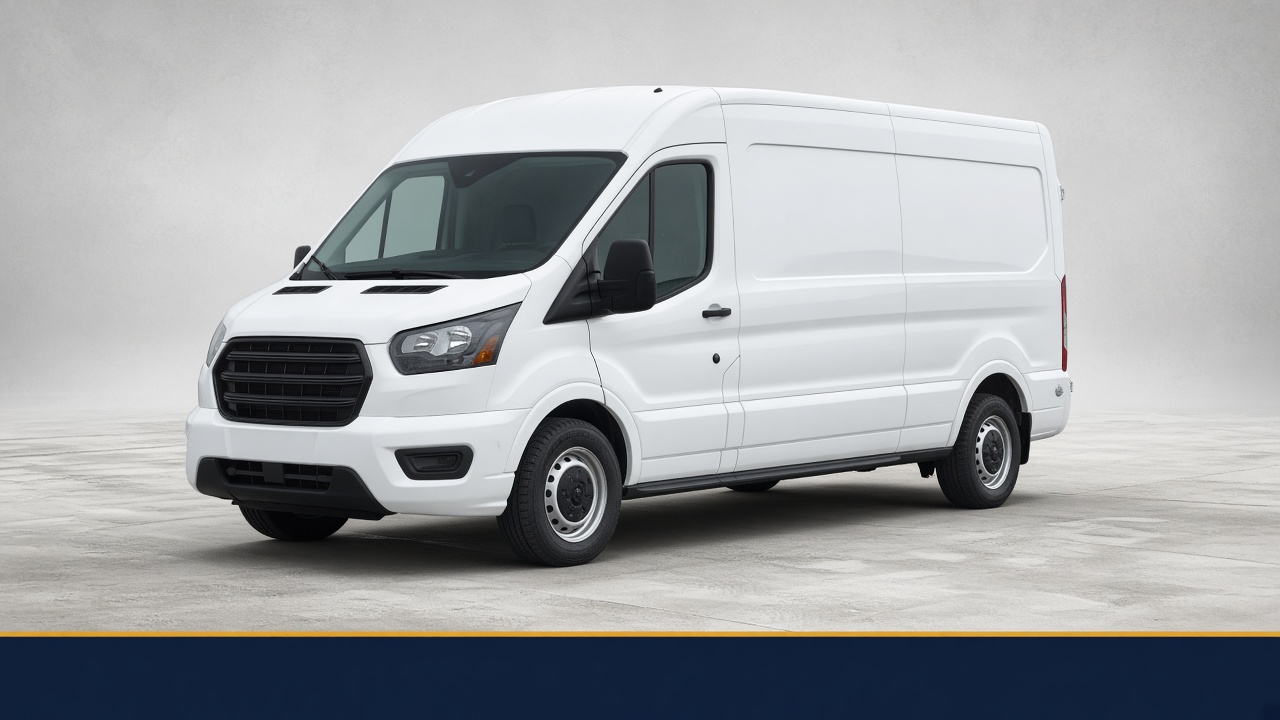
Overall: 4.3 / 5. The full-size Ford Transit is the van that does the heavy lifting the mid-size Transit Custom can't. More payload, more load volume, and the choice of front-, rear- or all-wheel drive plus Luton, tipper, dropside and chassis-cab conversions make it the default big van for anyone whose work has outgrown a one-tonne panel van. It's less car-like to drive than the Custom and the range is sprawling, but for sheer capability and ease of ownership nothing covers more jobs.
Browse live Ford Transits for sale, or read our full buying guide for what to check and what to pay.
What it is, and who it's for
The Transit is Ford's full-size (two-tonne-class) van, the big brother to the mid-size Transit Custom and the small Transit Connect/Courier. It's built for trades, couriers, removals, fleets and converters who need serious load space or payload: think large panel vans, box/Luton bodies, tippers and dropsides built on the chassis cab. There's a long-running current generation plus the fully electric E-Transit, and a huge spread of lengths, roof heights and drive types, so "which Transit" matters as much as "Transit or not".
Load space & payload: 4.7/5
This is the Transit's whole reason for being. You get multiple lengths (commonly L2–L4) and roof heights (H2–H3) in panel-van form, with a big, square, easy-to-load bay, plus the chassis cab for Luton, box, tipper and dropside conversions. Payload spans roughly a tonne up to around two tonnes on the heavy-duty 350/470 variants: far beyond what a Custom can carry. For removals, trade stock, big/bulky loads or a Luton with a tail-lift, this is the natural home. Match the exact length, roof and weight rating to the job and it's hard to out-grow.
Driving & cabin: 4.1/5
It drives like the big van it is: more trucky than the car-like Custom, with a higher driving position and a longer, taller body to place. That said, it's stable and predictable, the cabin is spacious and practical, and later models get a modern touchscreen and improved materials. Front-wheel drive versions maximise payload and low-load height; rear-wheel drive suits the heaviest loads, towing and tipper/Luton work; all-wheel drive is there for slippery sites and winter traction. Pick the drive type for the job and it's comfortable to live with all day. Just don't expect Custom-style agility in town.
Engines & performance: the 2.0 EcoBlue is the one
As with the Custom, the 2.0 EcoBlue diesel is the engine to target on used examples, offered in several power outputs: the mid and higher outputs make most sense in a heavy full-size van, especially if you load it hard or tow. There's a mild-hybrid option for marginal town economy, automatic gearboxes on many later vans, and the fully electric E-Transit if your routes and charging suit it. Older vans may carry earlier engines; post-2016 2.0 EcoBlue is the sweet spot for refinement, economy and parts support.
Running costs & reliability: 4.2 / 4.0
Running costs are reasonable for the class, and, crucially, because the Transit is everywhere, parts are cheap and every garage knows them, which keeps a big van affordable to own and quick to fix. Resale is solid. On reliability it's generally dependable, but the same wet (oil-bath) cambelt caveat applies to the 2.0 EcoBlue: it must be changed on schedule, so buy on documented history. Heavily-worked and ex-fleet vans can be high-mileage and hard-used, and town-only vans can clog the DPF. None of this is unusual for a working full-size van. It just makes service history and an honest inspection essential. The full fault checklist is in our buyer's guide.
Pros
- Huge load volume and payload: covers jobs a mid-size van can't
- FWD / RWD / AWD choice plus Luton, tipper, dropside and chassis-cab options
- Cheap, plentiful parts and specialists everywhere
- Proven 2.0 EcoBlue engine; auto and electric (E-Transit) options
- Strong resale and easy to sell on
Cons
- Wet-belt cambelt on the 2.0 EcoBlue must be serviced on time (buy on history)
- Bigger and less agile than the Transit Custom: more van to place in town
- Sprawling range means you must match length/roof/drive/weight carefully
- Many are ex-fleet and hard-worked: inspect thoroughly
Our ratings
- Load & payload: 4.7/5
- Driving: 4.1/5
- Value: 4.4/5
- Running costs: 4.2/5
- Reliability: 4.0/5
- Overall: 4.3/5
Verdict: should you buy one?
Yes: if you genuinely need the size. For big loads, Luton/tipper work, removals or high-payload trades the full-size Transit is the sensible default: enormously capable, cheap to run for its class and easy to resell. Target a post-2016 2.0 EcoBlue with full service history and a documented cambelt change, choose the drive type and body to suit the work (FWD/low-load for maximum payload, RWD for the heaviest loads and tippers), and check the DPF on town-used vans. If your loads actually fit a one-tonne van, the Transit Custom is nicer to drive and cheaper to run, so be honest about the size you need.
Find yours: browse live Ford Transits, and read the buyer's guide before you view.
FAQ
Yes: it's one of the most capable and easy-to-own big vans you can buy, with huge load space, cheap parts and strong resale. The main caveat is the 2.0 EcoBlue's wet-belt cambelt, so buy on service history.
The full-size Transit is the bigger two-tonne-class van (more volume, more payload, Luton/tipper/chassis-cab options); the Transit Custom is the mid-size one-tonne van, nicer to drive and cheaper to run when its size is enough.
FWD gives the best payload and a lower load floor for general panel-van work; RWD suits the heaviest loads, towing and tipper/Luton conversions; AWD adds traction for slippery sites and winter.
The 2.0 EcoBlue (2016 on), in a mid or higher power output for a loaded big van; there's also a mild-hybrid and the fully electric E-Transit.
Generally dependable, but the 2.0 EcoBlue's oil-bath cambelt must be changed on schedule: a documented belt change and full history are essential, and many are ex-fleet high-milers, so inspect carefully.