Sizing guide
Van Sizes & Payload Explained: L1/L2/L3, H1/H2/H3
Van adverts are full of codes, L2 H2, T30, 3.5t, CR35, T32, and they all mean something that affects whether a van suits you. This plain-English guide decodes them so you buy the right size and don't get caught out on payload or licence.
Jump to a step
-
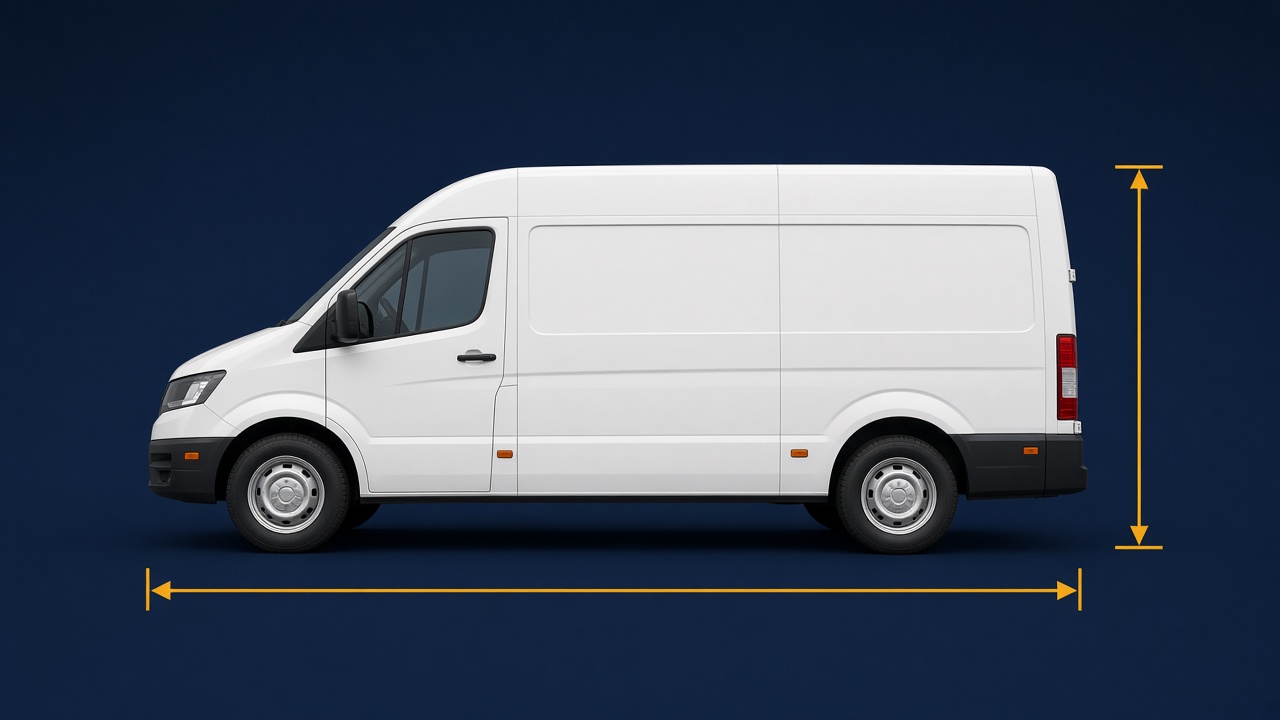
Length: L1, L2, L3, L4
Most manufacturers grade body length as L1 (short) through to L4 (extra long):
- L1, shortest; easiest to park; least load length.
- L2 (the common "standard/long") a good all-rounder for most trades.
- L3 / L4, long and extra-long; maximum load length for removals, big deliveries and conversions.
Some brands use their own words (Compact/Standard/Long) but the idea is the same, pick the shortest body that fits your longest regular load.
-
Roof height: H1, H2, H3
- H1 (low roof), fits in most car parks and home garages; you can't stand inside.
- H2 (medium), stand-up height for many; the popular choice for trades working out of the van.
- H3 (high), maximum internal height for bulky loads and walk-in use; too tall for height-barriered car parks, check before you buy if you use those.
-
Weight ratings & model codes
Vans are rated by gross vehicle weight (GVW), the maximum the whole loaded van can weigh. Manufacturers bake this into the model name:
- Ford Transit: 290 / 310 / 350 (the 350 gives the most payload).
- VW Transporter: T26 / T28 / T30 / T32 (T32 = heaviest-duty).
- VW Crafter / Mercedes Sprinter: CR35 / 314 / 316 etc. around the 3.5t class.
Higher number = higher weight rating and usually more payload.
-
Payload: the number that really matters
Payload = how much you can actually carry (GVW minus the van's own kerb weight). Two traps:
- High-spec vans carry less. Fancy trims, big wheels, extra seats and conversions add weight and reduce payload. A plush crew-cab can carry a lot less than a basic panel van on the same chassis.
- Always check the plated payload for the specific van, not the brochure best-case. Overloading is illegal and dangerous, and invalidates insurance.
-
Body styles
- Panel van, fully enclosed load area (most common).
- Crew van / Double Cab-in-Van, second row of seats + a shorter load area (carry a team and kit).
- Dropside, flat bed with fold-down sides (timber, aggregate, awkward loads).
- Tipper, hydraulic tipping bed (muck-away, landscaping).
- Luton, box body overhanging the cab for maximum volume (removals, deliveries); often with a tail-lift.
- Chassis cab, a bare chassis for custom conversions.
Browse by body type only where those pages already exist.
-
What licence do you need?
- Standard car licence (category B): lets you drive vans up to 3,500kg (3.5t) GVW, which covers the vast majority of vans, including most "3.5-tonne" Lutons and large panel vans.
- Over 3.5t (e.g. some Iveco Daily and heavy conversions): you may need category C1, check the plated GVW before buying.
- Towing: rules depend on your licence date and the trailer weight, check the current DVLA guidance if you plan to tow.
-
Quick buying checklist
- Length, fits your longest load? (L1–L4)
- Roof, enough internal height? (H1–H3) And will it clear your car parks?
- Payload, carries your heaviest load, checked on the plate (not the brochure)?
- Body, panel, crew, dropside, tipper or Luton?
- Licence, under 3.5t for a car licence, or do you need C1?
Get those five right and you've bought the right-sized van. Need help choosing by job? See the best van for your trade. Ready to shop? Browse vans near Southampton or your area and filter by body type, length and payload.
Put this guide to work
Use what you’ve learned to shortlist stock, or list your own van for free.
Frequently Asked Questions
They're body lengths, L1 is shortest, rising to L3/L4 for the longest. Pick the shortest that fits your longest regular load.
Roof heights, H1 (low, fits car parks), H2 (medium, often stand-up), H3 (high, maximum volume but too tall for height barriers).
Payload is how much you can legally carry (gross weight minus the van's own weight). High-spec vans carry less, always check the plated payload, as overloading is illegal and invalidates insurance.
Yes, a standard category B car licence covers vans up to 3,500kg gross. Heavier vehicles may need category C1, so check the plated weight before buying.
They're weight-rating codes in the model name, higher numbers mean a higher gross weight rating and usually more payload (e.g. VW T32, Ford 350, Crafter CR35).
Related guides
How to Buy a Used Van
A complete step-by-step guide to buying a used van in the UK, from setting your budget to completing the sale safely.
How to buy a van with your head, not your heart
A practical UK guide to buying a van from a dealer or a private seller: your rights, the checks, and when to walk away.
How to Sell Your Van
Maximise your van's sale price with this guide covering preparation, pricing, photography and completing the sale.